The World is Too Much With Us
2025Installation, Prairie Ronde, Vicksburg, MI
Bio-archive and anthro-geology archive, incense burners made with waste and
cast concrete, experimental perfume incense, ‘digested’ paper, photo prints on conrete
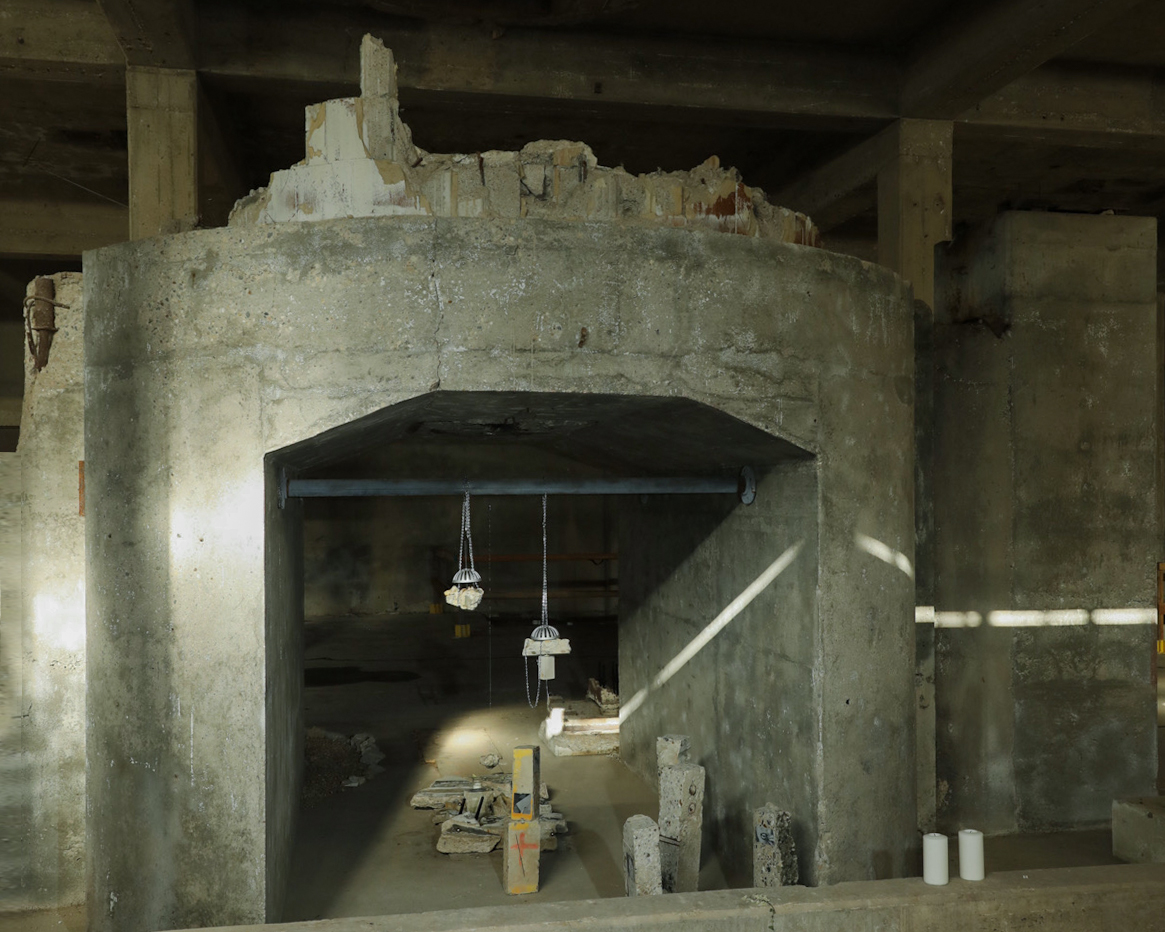
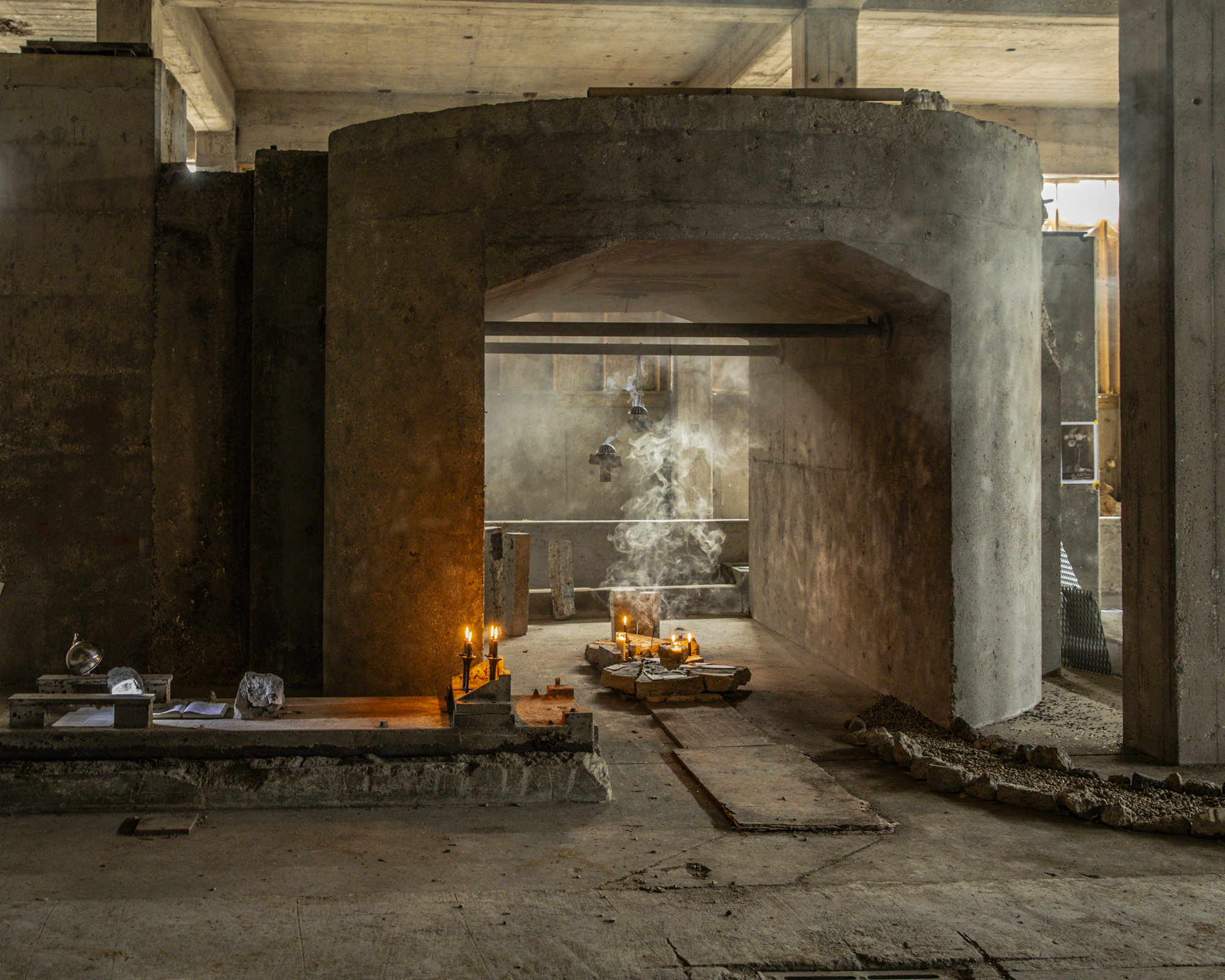
Installation and residency took place on the active construction site of the ruins of the historic Lee paper mill in Vicksburg, MI.
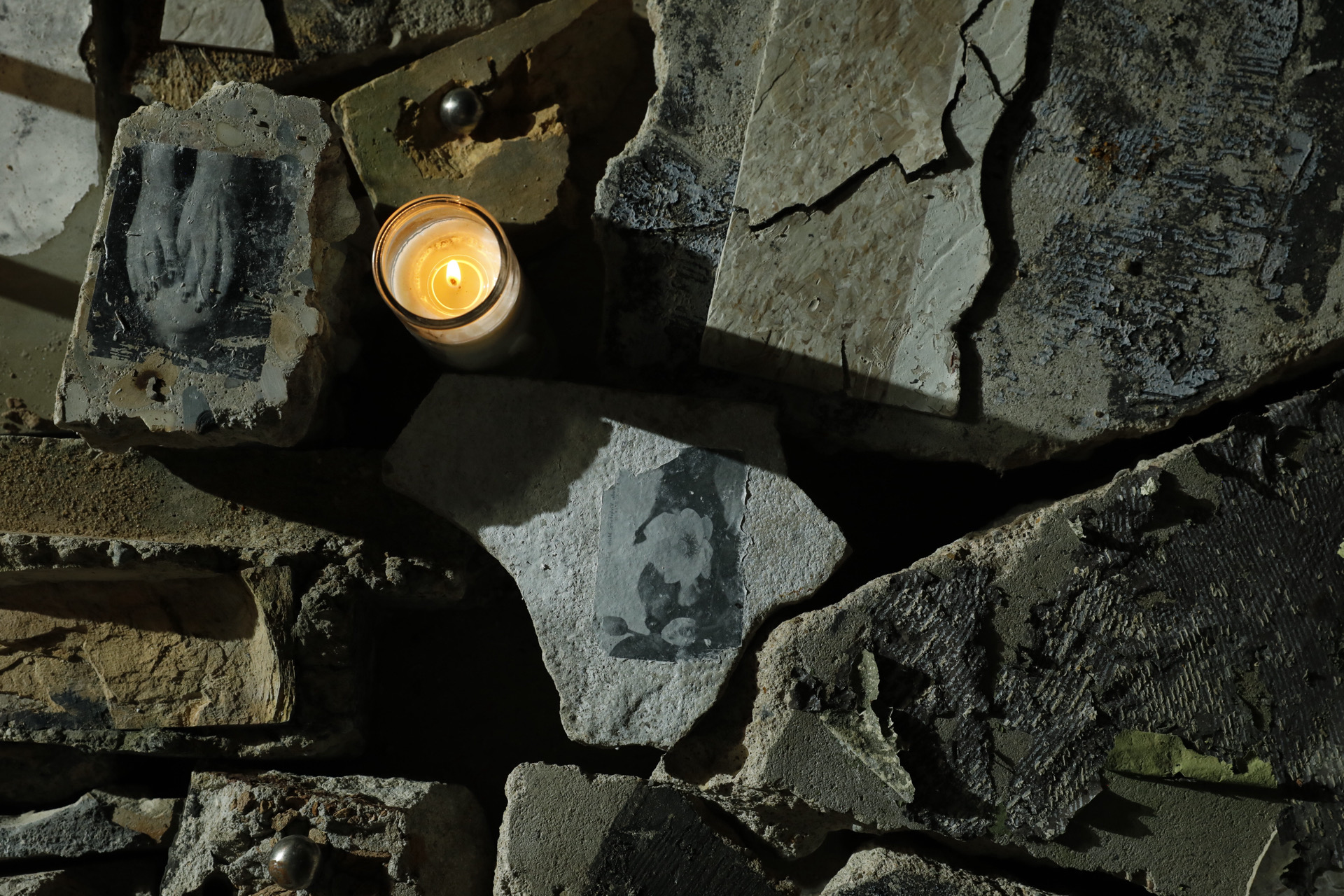
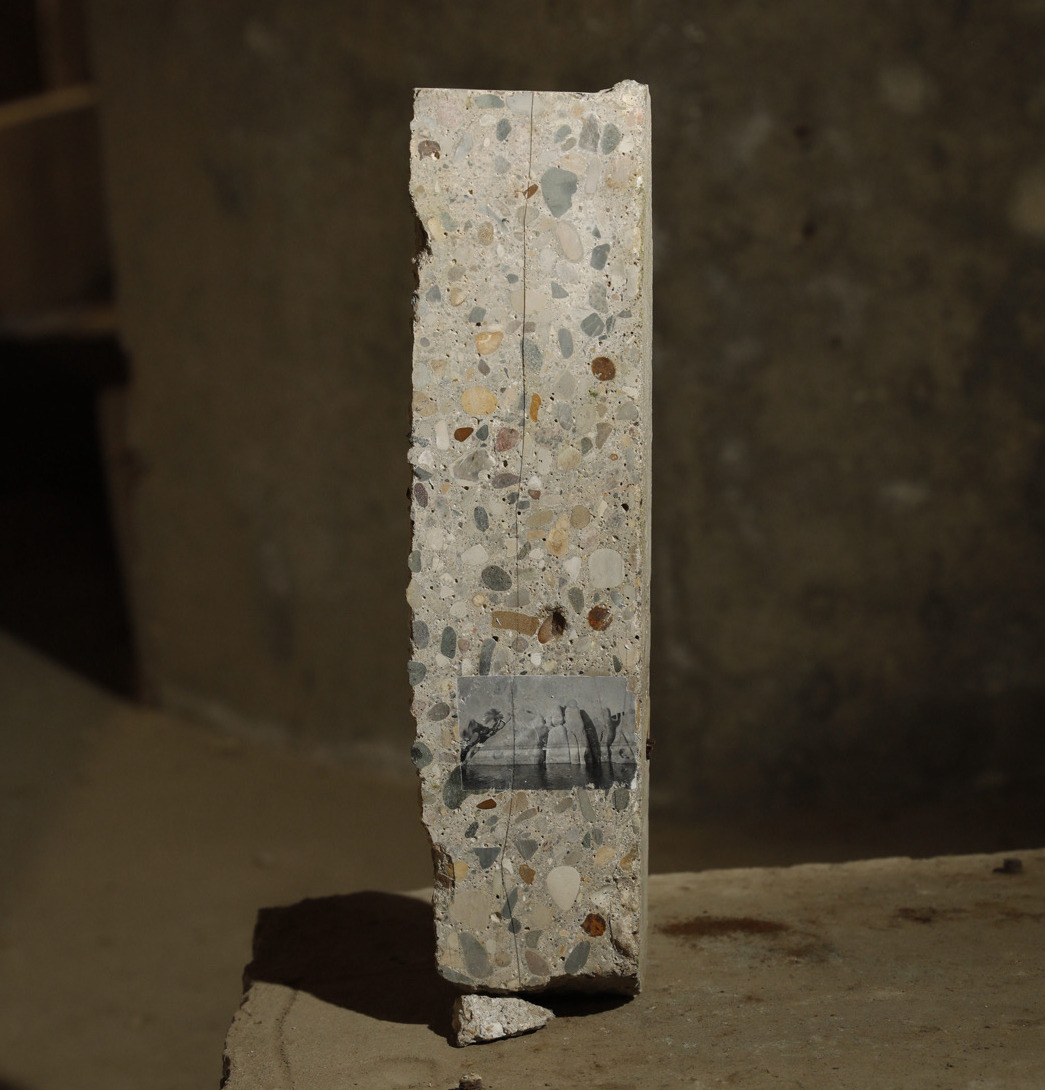
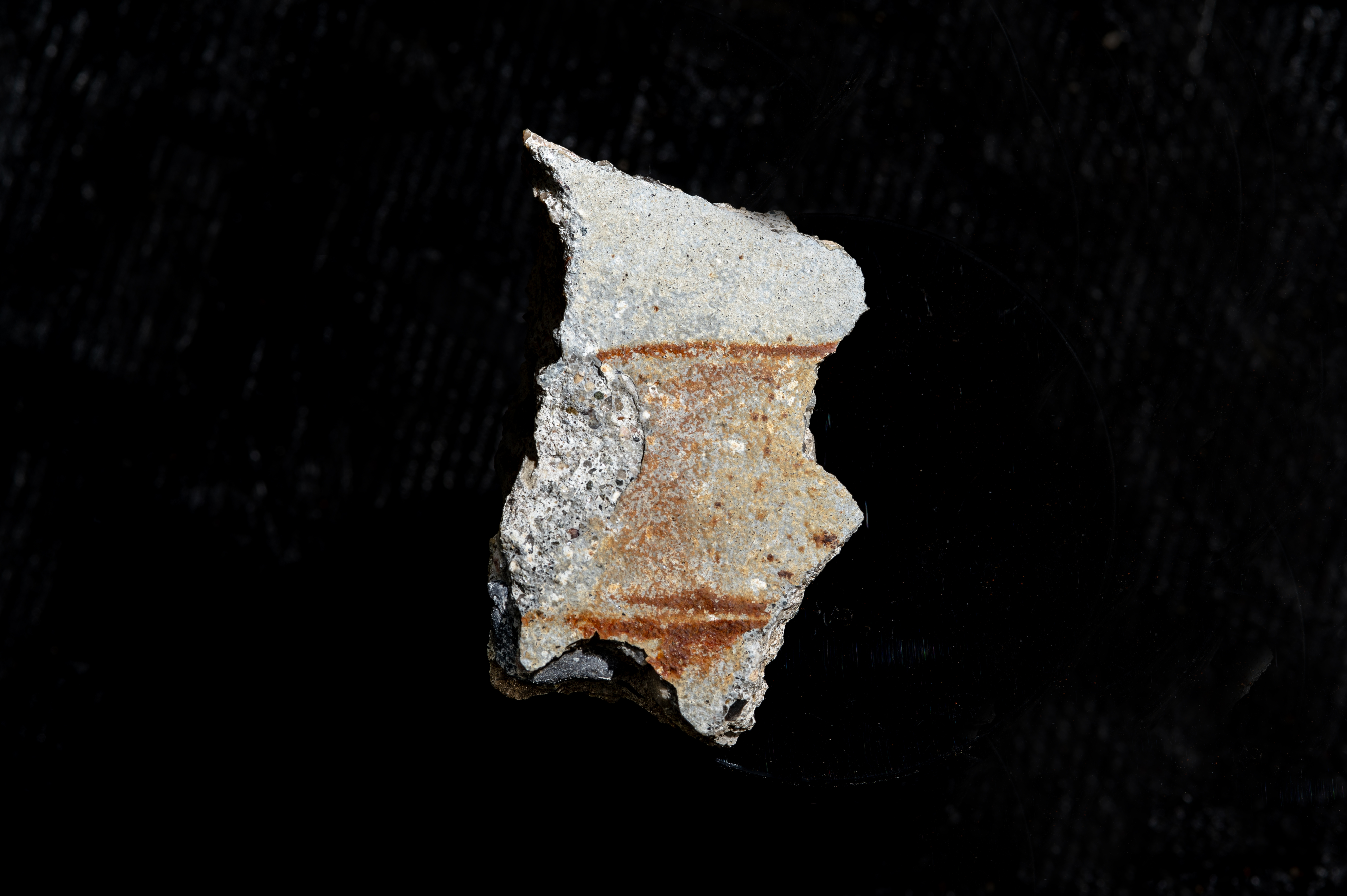
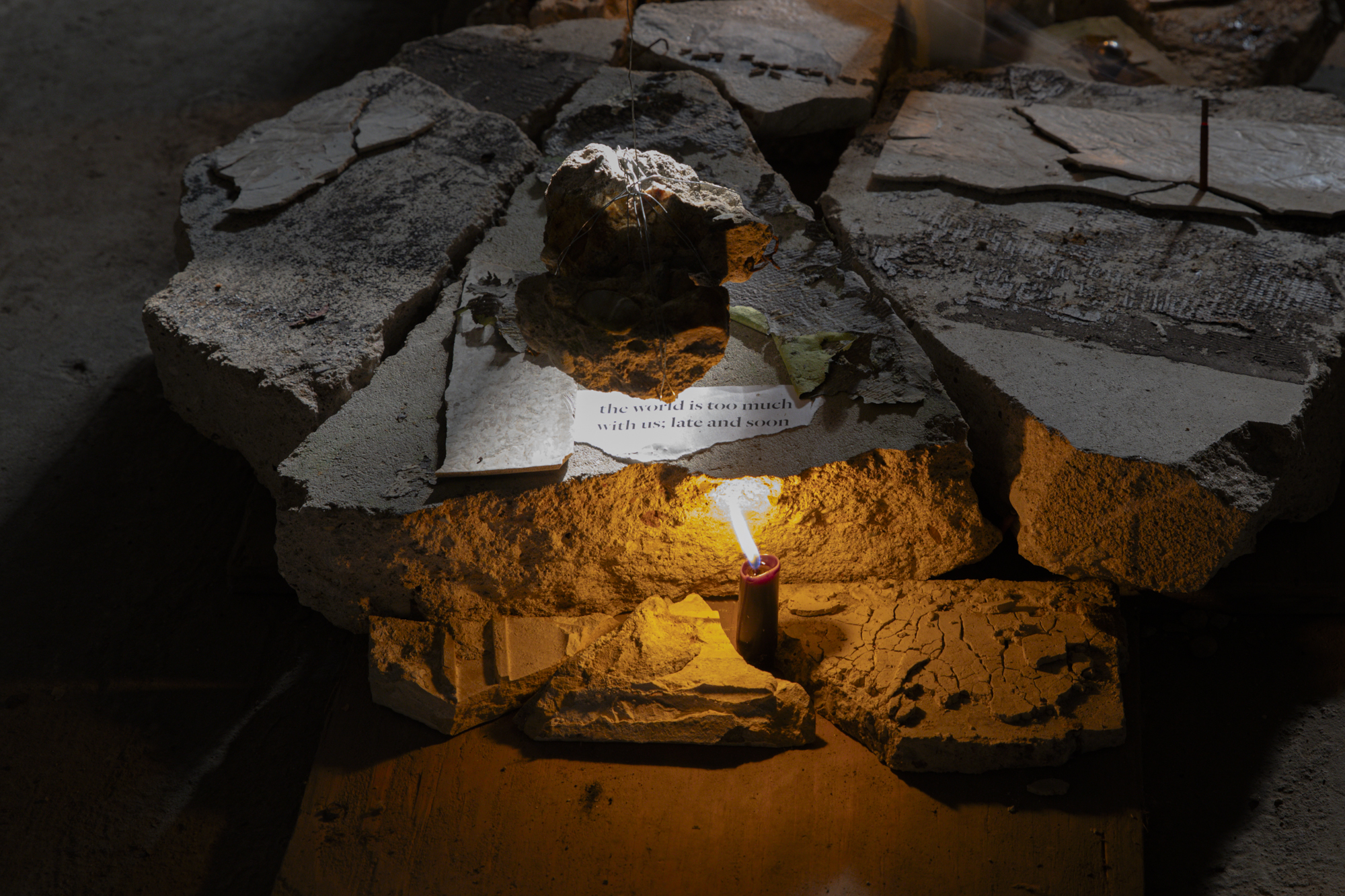
Building on my prior work and research related to edible clay, this work explores a strange coincidence in material uses of kaolin clay, the most notable form of edible earth consumed in the United States. I first came across kaolin for its reputation as “white dirt,” clandestinely consumed by those who engage in geophagy (pica). However, it turned out that its main industrial use in the US has been as an additive to paper, used to make glossy magazine pages and bright white cardstocks. To combine these already-intertwined histories, I began a process of Involving my own body and digestive enzimes into the process of making paper. I chewed up several rocks of kaolin clay and spit them back out into a paper pulp (made from print outs of my medical records), which fostered the growth of my bacteria culture over the course of the paper making process. These pages were dried in the mill and overtop pieces of waste cement from the mill’s demolition. The result were 12 pieces of strangely-scented bio-paper sculptures. (Documentation of this process ⇝)
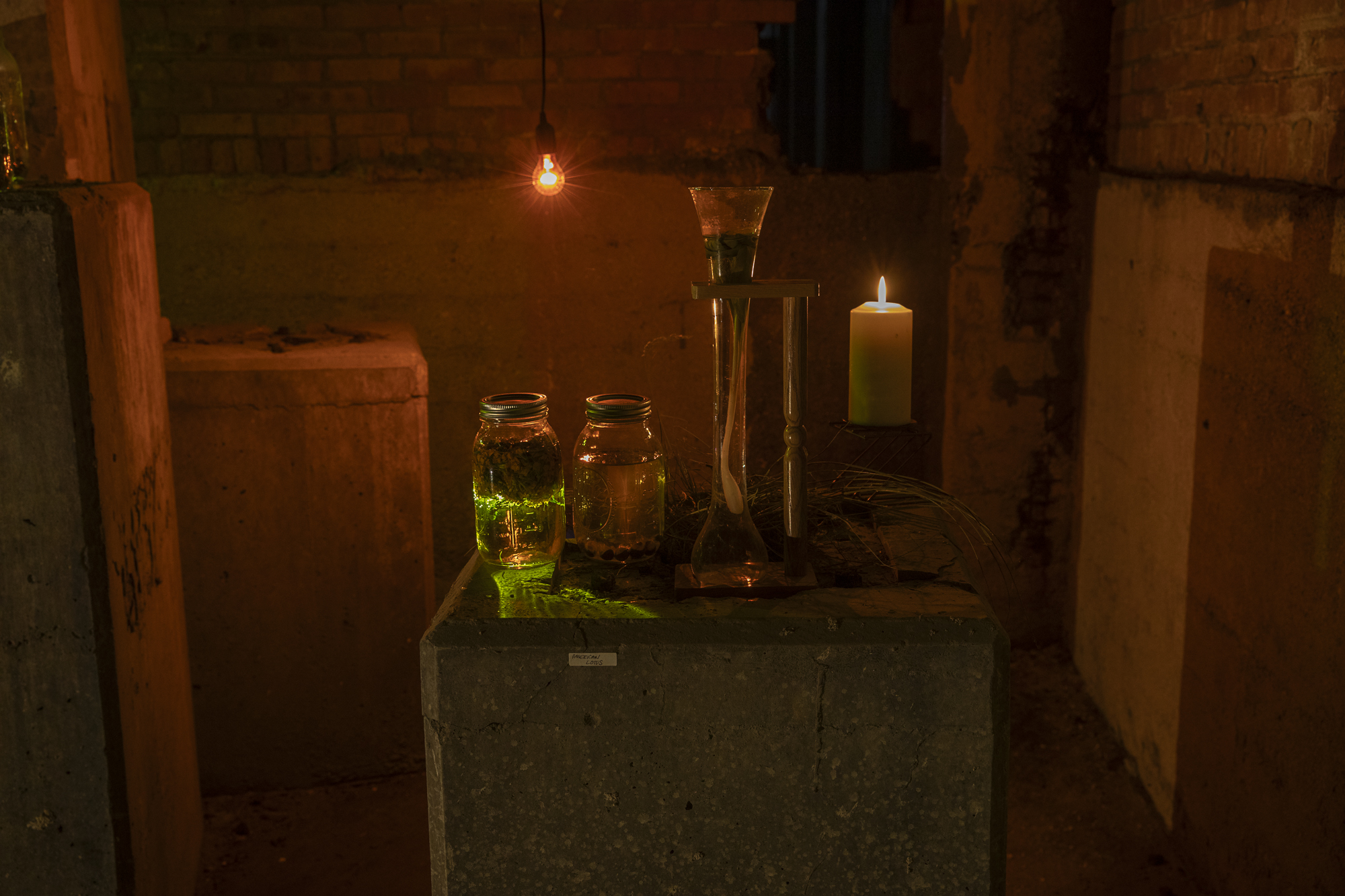
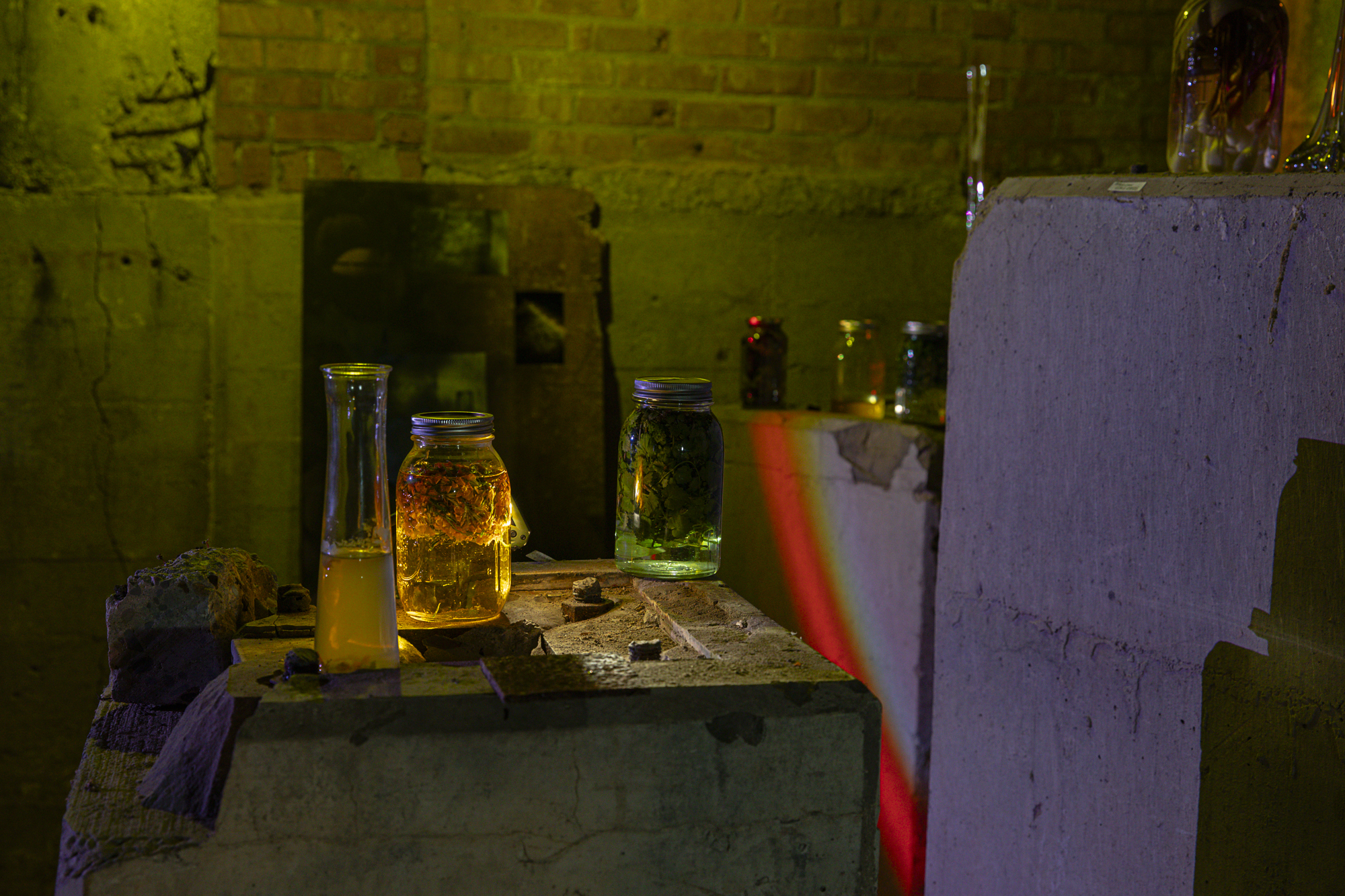
Another aspect of this body of work focused on the American Lotus, a native flower which, at least through the early 1900s, would blanket the nearby lake in Vicksburg so densely with enormous blooms that Americans would travel hours just for the sight of it. The flower went locally extinct around 1930, likely due to industrial activities and the over-harvesting of its seed pods. Strangely, this threatened species now only exists in parts of Michigan one would assume are too toxic for a plant that has been called the "canary in the marshes" for its sensitivity; The American Lotus can allegedly be found in the former Ford marshes south of Detroit, and marshes a bit further south on the property of a nuclear power plant. The installation at the mill contained jars with propogating lotus seeds, and photographs documented my laborious process to propogate them.
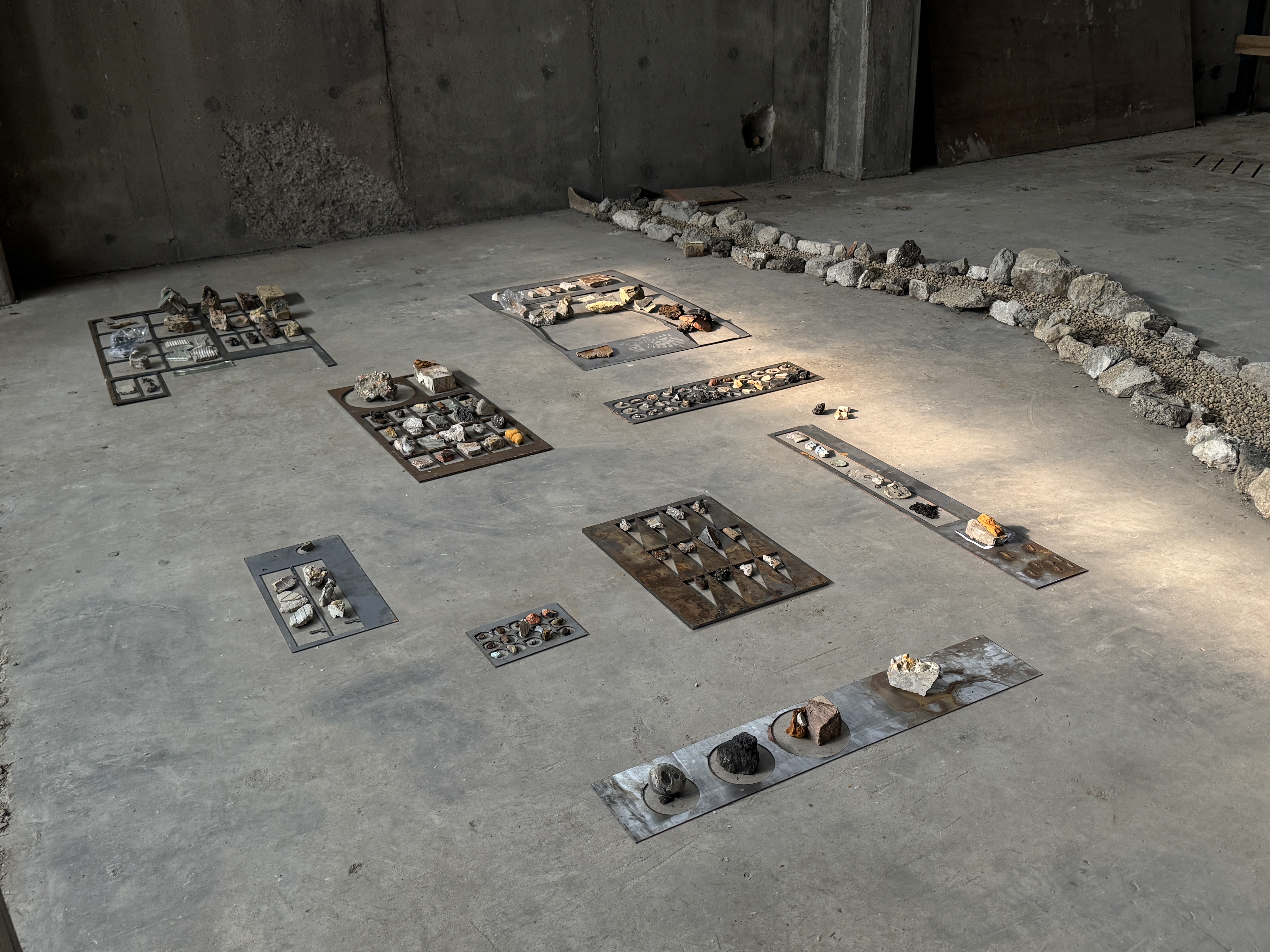
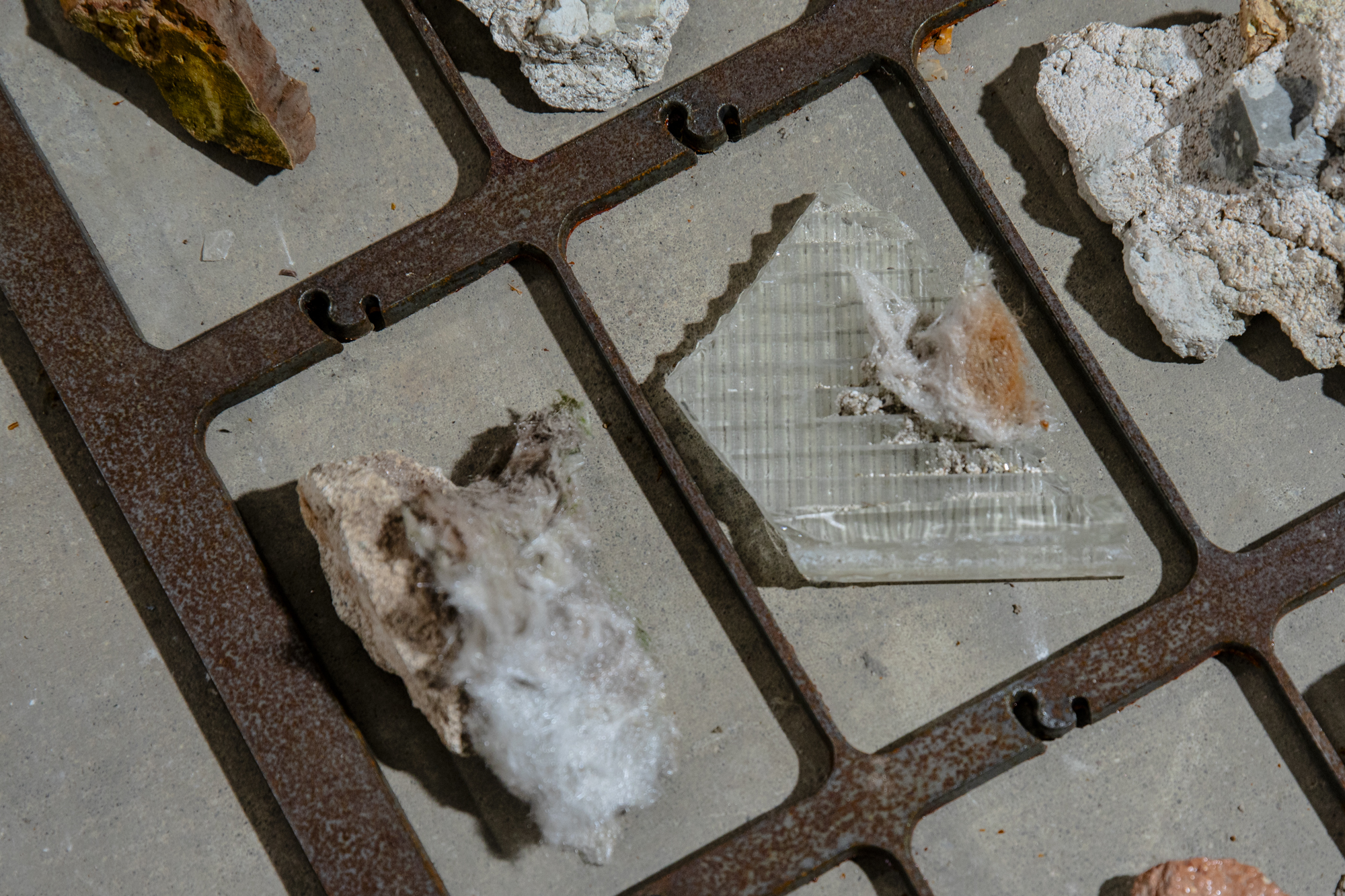
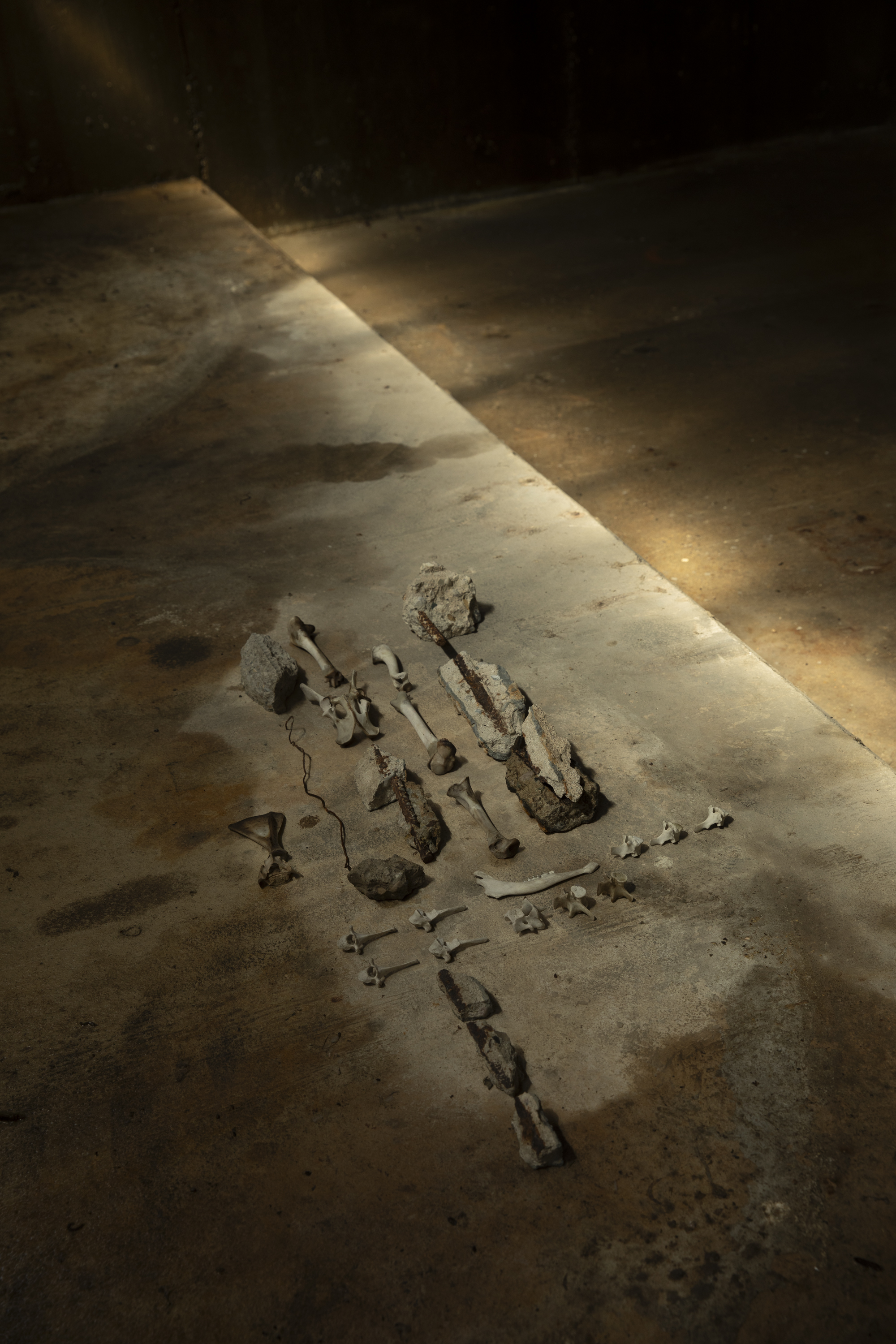
Two speculative archive installations created for The Mill contained post-industrial archaeological musings about what materials might be future strata, and what materials challenge our positivist categorizations across "organic" and "inorganic" agencies. A collection of what I call "anthro-geology" are labeled with geologic terms and their agencies across bodies, both human and nonhuman. Biologic plants on display are noted for their resistence to extractive practices in my experiments on the property (scent extraction via steam distillation). Many specimens explore what constitutes purity and contamination, including plants used to remedy the consumption of toxic materials (kaolin clay, activated charcoal, foraged Michigan clay, and ramps).
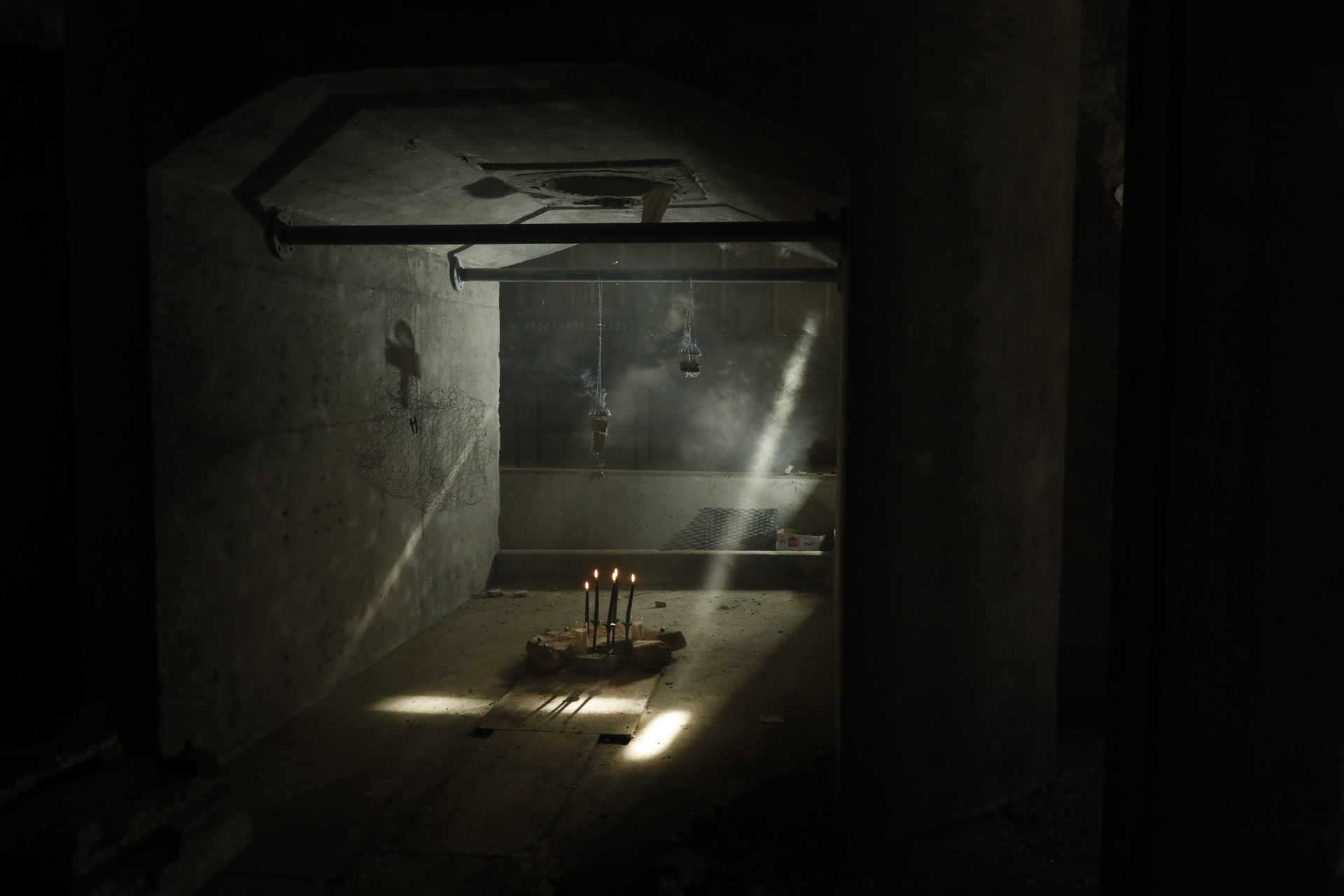
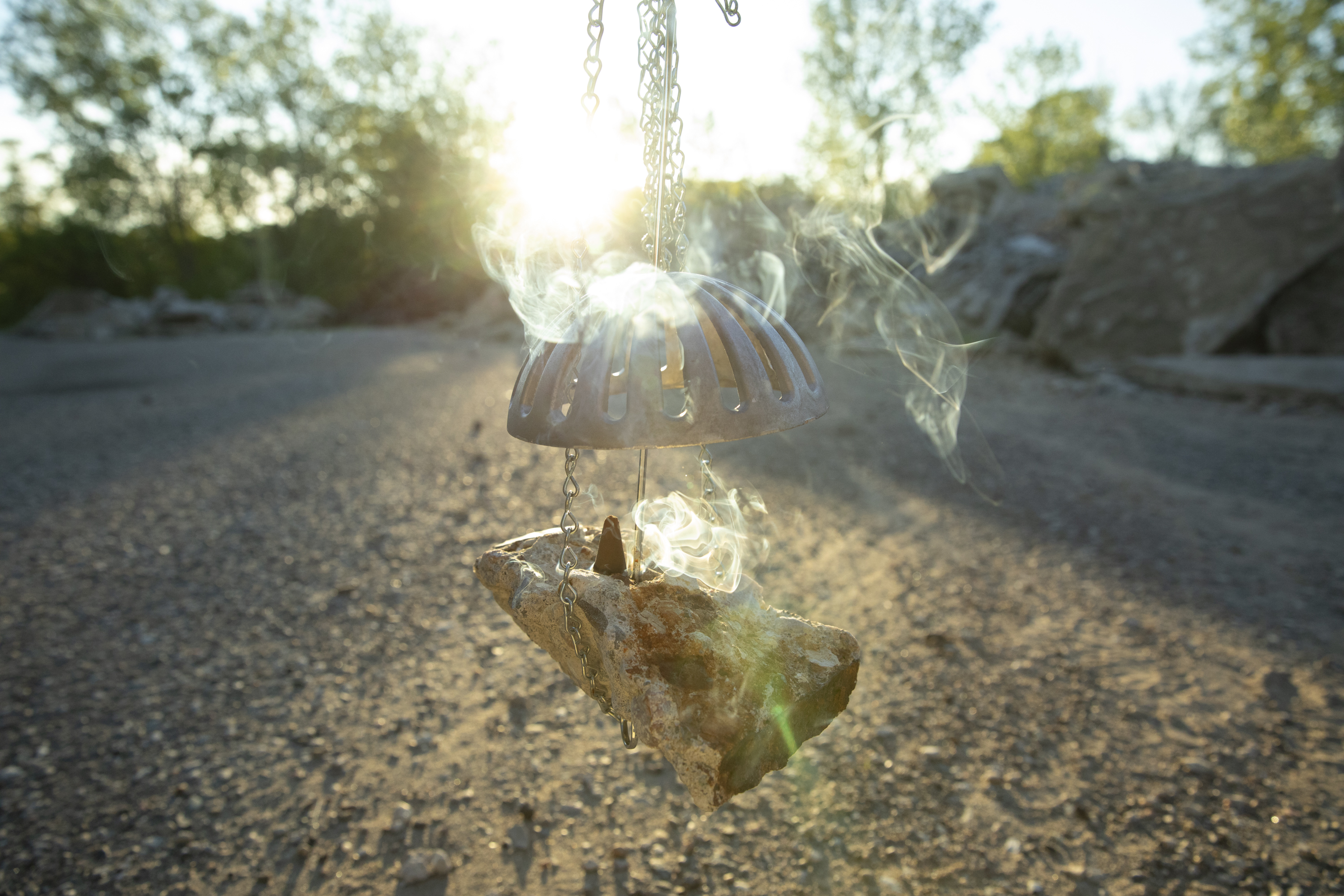
One of the most toxic impacts of paper mills to its surrounding community to this day is airborne hydrogen sulfide, which carries with it a strong scent, and overexposure is known to cause acute lung issues and diseases. During my time here, I have been working on a perfume which combines this kind of sulfur smell with the smell of the American Lotus and a complex formula I created to mimic the smell of crisp white paper in a new book. These scents were made into incense cones, hung from feral incense thuribles created using the rubble from The Mill. Their design is based on catholic incense thuribles, which were used in outdoor processions at the church my catholic grandmother and mother attended in Pennsylvania. Incense is used by the Catholic church to purify "all that it touches" (despite incense smoke ironically posing a non-insubstantial risk to human health itself). I was interested to use incense directly in the ruins and source of such toxicity concerns.

All installation photography by the artist: